Understand the service
What is excavation & traditional repair?
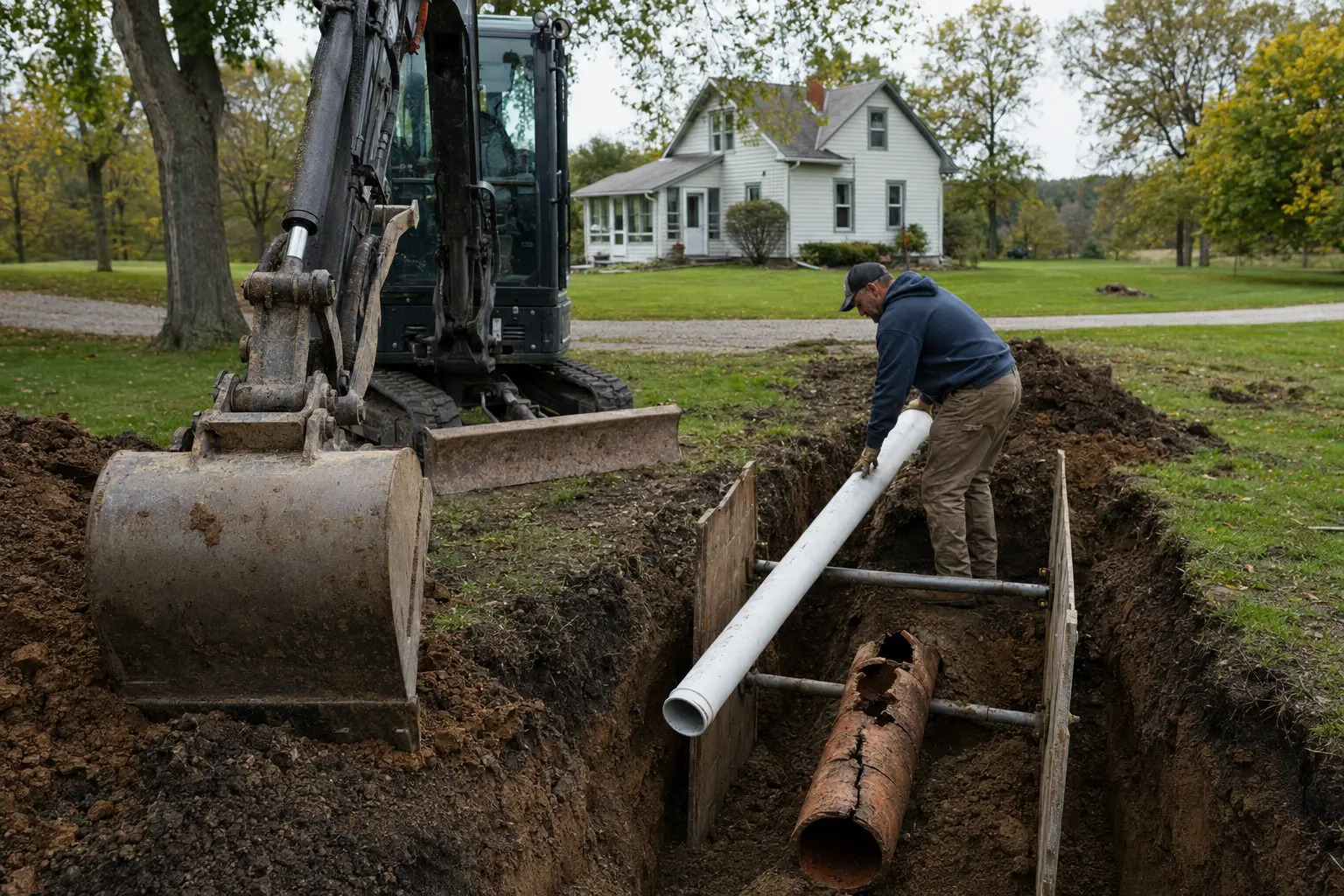
Excavation provides visual and physical access to the sewer and surrounding soil. The opening may be a focused repair pit or a longer trench, depending on the defect, depth, pipe route, and amount of replacement required.
Direct access allows grade corrections, fitting changes, removal of collapsed material, and connection work that a liner or bursting head cannot accomplish. Utility locating and safe trench practices are essential parts of planning.
When it may fit
When might this service be appropriate?
This work makes sense only when it matches the condition of the line. It may be discussed in situations such as these:
- The pipe is completely collapsed or missing along part of its route.
- A major belly, back-pitched section, or severe offset needs realignment.
- Complex fittings, transitions, or connection points require direct access.
- Utility conflicts, access limits, or pipe condition rule out trenchless methods.
What to expect
How the process typically works
- 1
Locate and protect
The sewer and nearby utilities are marked, and the excavation plan is matched to site conditions.
- 2
Open the repair area
Surface materials and soil are removed with appropriate protection and access controls.
- 3
Correct the pipe
The failed section is removed, the base and grade are prepared, and new pipe is connected.
- 4
Test and restore
Flow and connections are checked before backfilling and completing the agreed surface restoration.