Understand the symptom
What can pooling water or sewage mean?
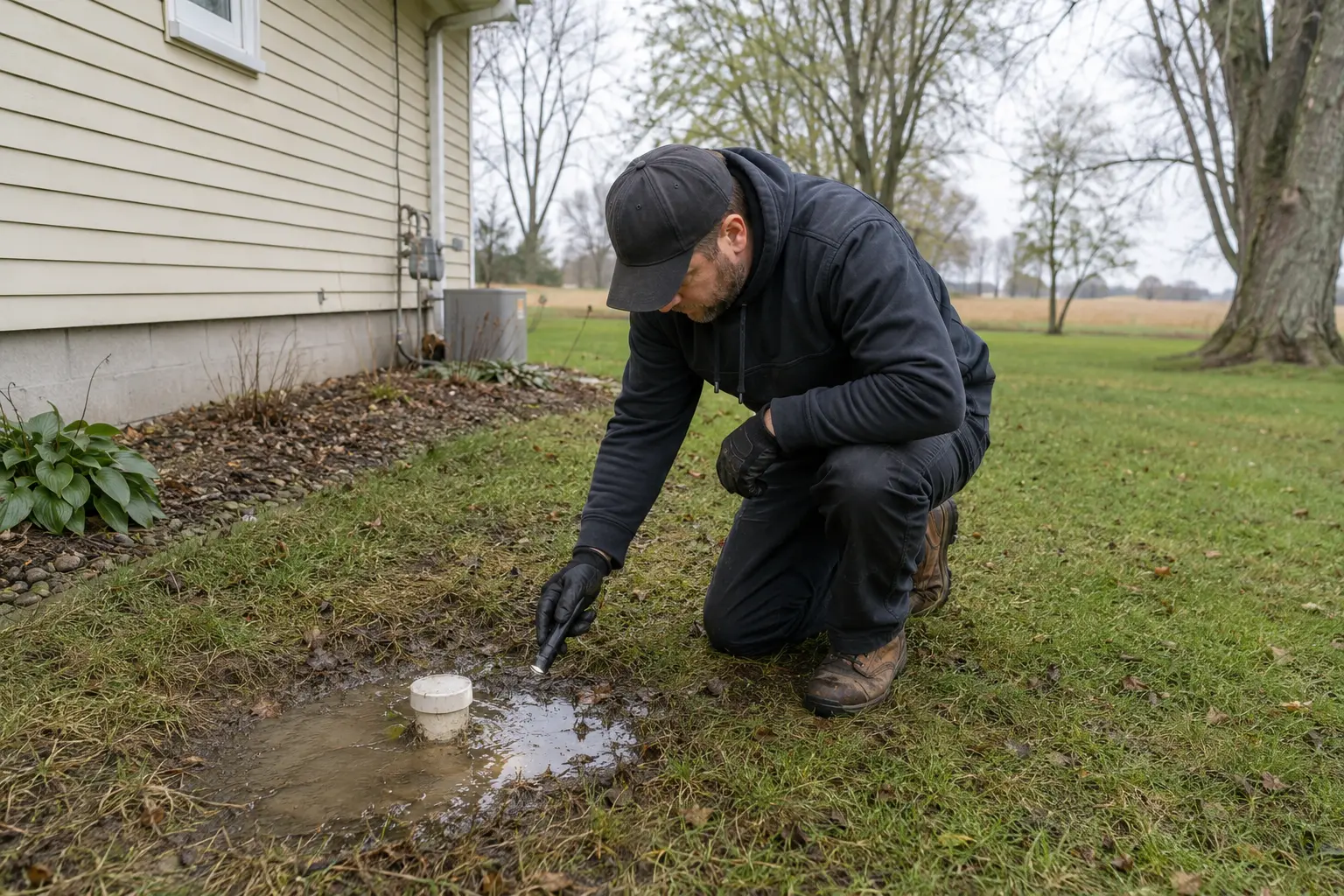
The location of the pooling matters. Wastewater near a basement drain usually points to reverse flow inside the plumbing system. Water around an exterior cleanout may indicate a full line or damaged cap, while persistently wet soil above the sewer route may come from an underground leak.
Not every puddle is sewage. Snowmelt, roof drainage, foundation seepage, sump discharge, and plumbing supply leaks are common in Central Wisconsin. Odor, color, timing, nearby fixtures, and the mapped sewer route help distinguish those sources.
Possible sources
Common causes to consider
Active sewer backup
A downstream blockage can force wastewater out through a floor drain, fixture, or cleanout.
Leaking sewer lateral
Cracks, failed joints, corrosion, or root openings can release wastewater into surrounding soil.
Damaged cleanout
A loose cap, broken riser, or buried opening can leak when the line fills.
Unrelated drainage source
Rain, thawing ground, sump discharge, or a water-line leak can resemble a sewer problem and must be ruled out.
Protect the property
What should you do now?
- Keep people and pets away and avoid walking through or touching suspected wastewater.
- Stop or reduce water use if the pooling changes when toilets, sinks, laundry, or showers are used.
- Do not mow, dig, or drive equipment over a soft area that may conceal a damaged pipe or open ground.
- Request an evaluation and note the weather, odor, color, location, and connection to household water use.
Find the cause
How the problem is typically diagnosed
- 1
Identify the source
The area is compared with plumbing use, weather, drainage paths, and the known sewer route.
- 2
Inspect accessible piping
Cleanouts, basement drains, and nearby fixtures are checked for evidence of a restricted line.
- 3
Locate underground defects
Camera locating or targeted testing may identify the position of a crack, joint, or collapse.
- 4
Plan containment and repair
The cause determines whether clearing, spot repair, lining, replacement, or another trade is appropriate.