Understand the symptom
What can sewage odor mean?
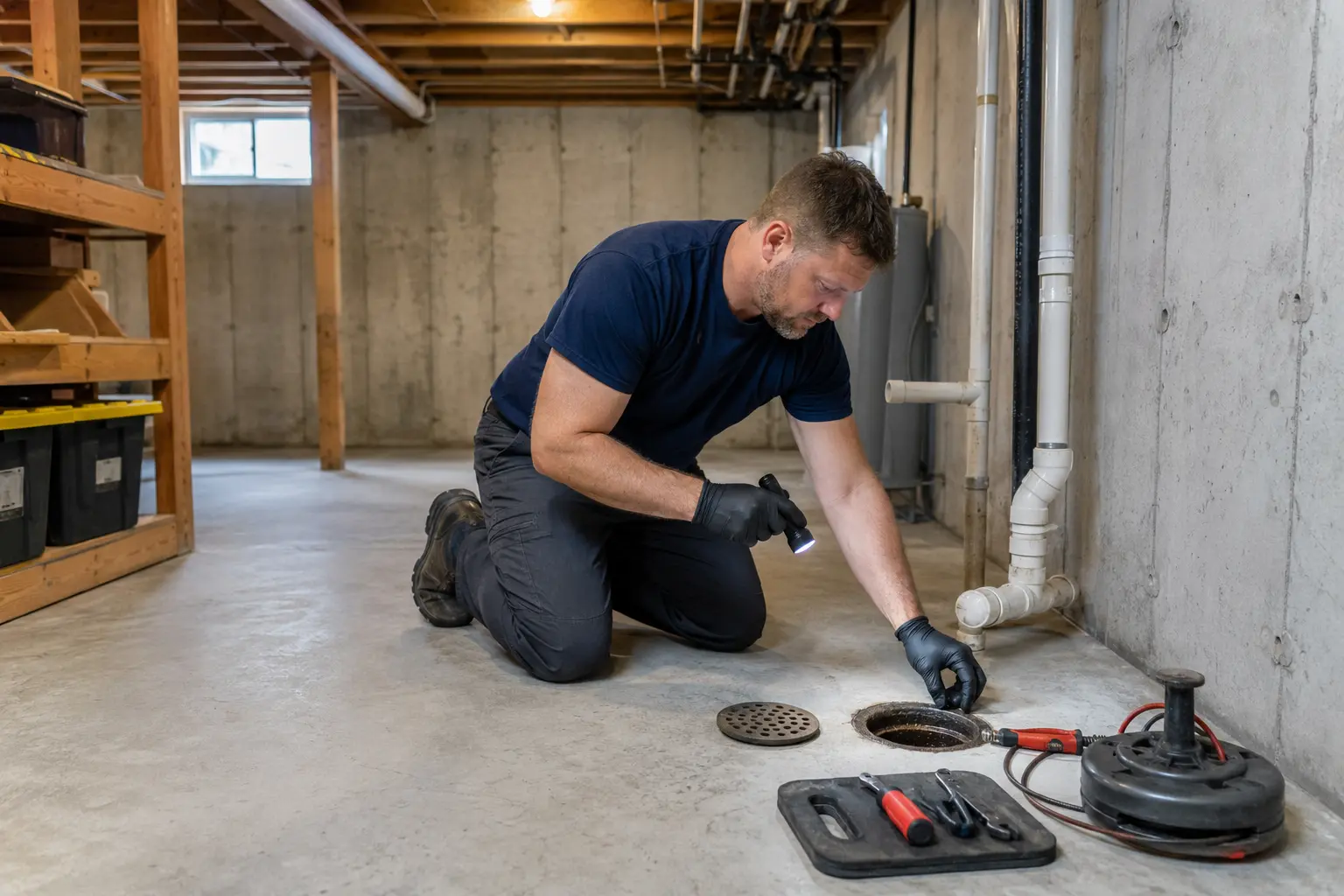
Plumbing traps hold a small amount of water that blocks gases from the drain system. An infrequently used floor drain, utility sink, or basement shower can dry out and allow odor into the home. This is a common and often simple cause, but it is not the only possibility.
Odor near a toilet can indicate a failed seal, while odor near a cleanout may come from a loose or damaged cap. A smell that appears with gurgling, wet soil, or repeated backups can point to a larger drainage or sewer-line problem.
Possible sources
Common causes to consider
Dry plumbing trap
Water can evaporate from an unused drain, removing the barrier that normally blocks sewer gas.
Failed fixture seal
A loose toilet, damaged wax ring, or compromised connection can release odor around the fixture.
Vent or cleanout problem
A blocked vent or unsealed cleanout can allow gas to escape where it should not.
Sewer leak or backup
A cracked pipe, leaking joint, concealed wastewater, or active backup can create persistent odor.
Protect the property
What should you do now?
- Identify where and when the odor is strongest without entering a visibly contaminated area.
- Run water briefly into an infrequently used drain to restore its trap, then monitor whether the odor returns.
- Look for a loose toilet, dry floor drain, open cleanout, slow fixtures, damp materials, or signs of wastewater.
- Request an inspection if the source is unclear, the odor returns, or other sewer symptoms are present.
Find the cause
How the problem is typically diagnosed
- 1
Inspect traps and seals
Common entry points such as floor drains, toilet bases, and cleanout caps are checked first.
- 2
Compare drainage symptoms
Gurgling, slow flow, backups, or a change during water use may connect the odor to a restriction.
- 3
Evaluate concealed sources
Moisture, staining, and odor patterns can help locate a hidden leak or contaminated material.
- 4
Test or inspect as needed
A camera inspection, smoke test, or other targeted method may be used when the opening is not obvious.