Understand the service
What is pipe lining?
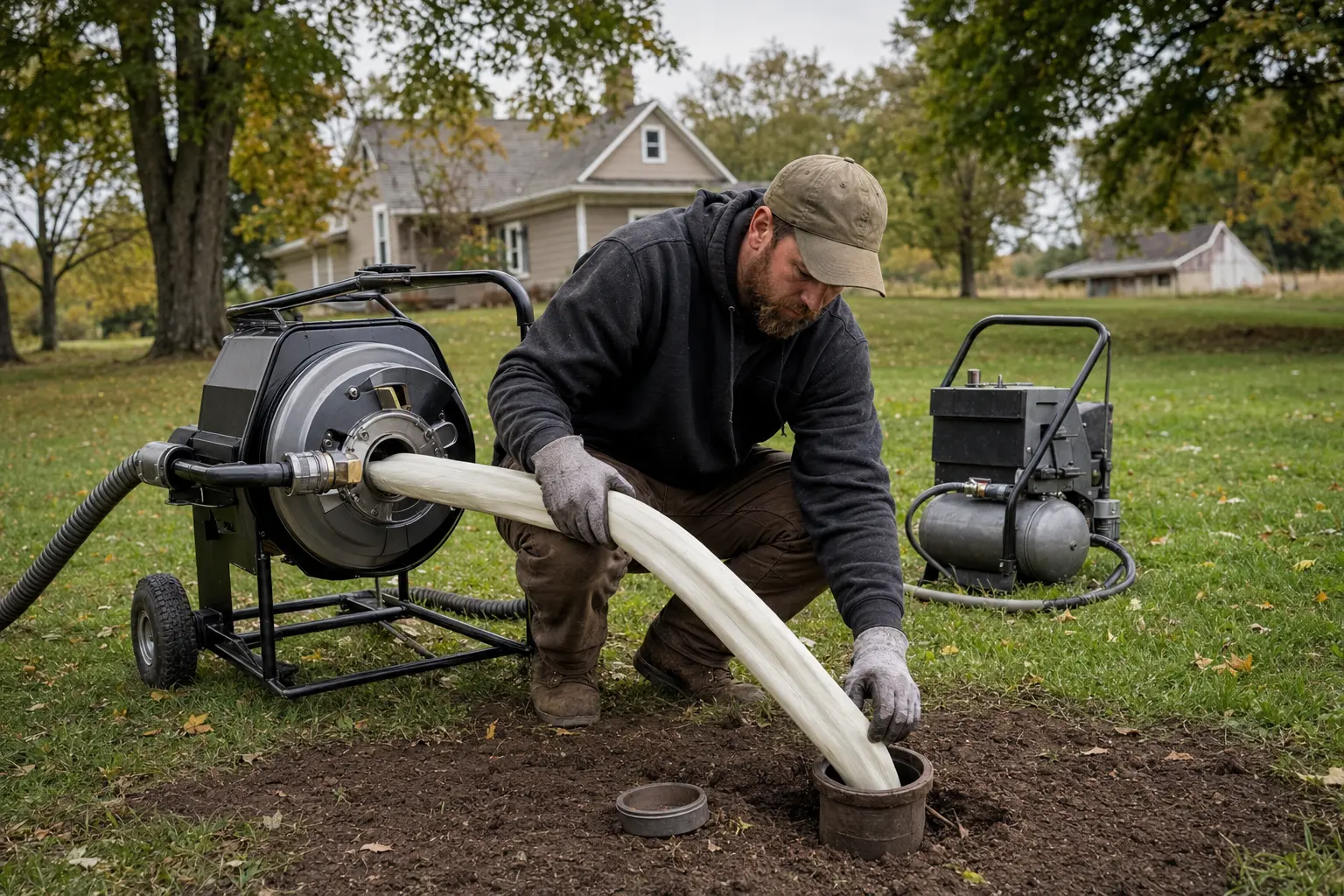
CIPP sewer relining creates a smooth new pipe wall inside the old line. The liner is sized for the run, positioned through an access point, expanded against the host pipe, and cured into a rigid structural tube.
Before installation, the sewer must be thoroughly cleaned and inspected. Roots, scale, protrusions, and debris can interfere with fit, while severe deformation or a complete collapse can prevent lining altogether.
When it may fit
When might this service be appropriate?
This work makes sense only when it matches the condition of the line. It may be discussed in situations such as these:
- The pipe has cracks, leaking joints, or root-entry openings but retains a usable shape.
- The route passes under surfaces where continuous excavation would be disruptive.
- A reasonably continuous run can be cleaned and accessed for liner installation.
- The slight reduction in inside diameter will not create a drainage concern.
What to expect
How the process typically works
- 1
Clean and measure
The line is cleared, inspected, and measured to prepare the correct liner length and diameter.
- 2
Prepare the liner
Resin is distributed through the liner under controlled conditions.
- 3
Position and cure
The liner is inserted, expanded against the host pipe, and cured using the selected system.
- 4
Reopen and verify
Connections are restored as needed and a final camera inspection checks the finished interior.