Serving Stevens Point & Central Wisconsin

Trenchless Sewer Repair in Stevens Point, WI

No-dig and low-dig sewer repair or replacement methods designed to reduce disturbance to yards and finished surfaces.

Inspect first Explain the options Local service area
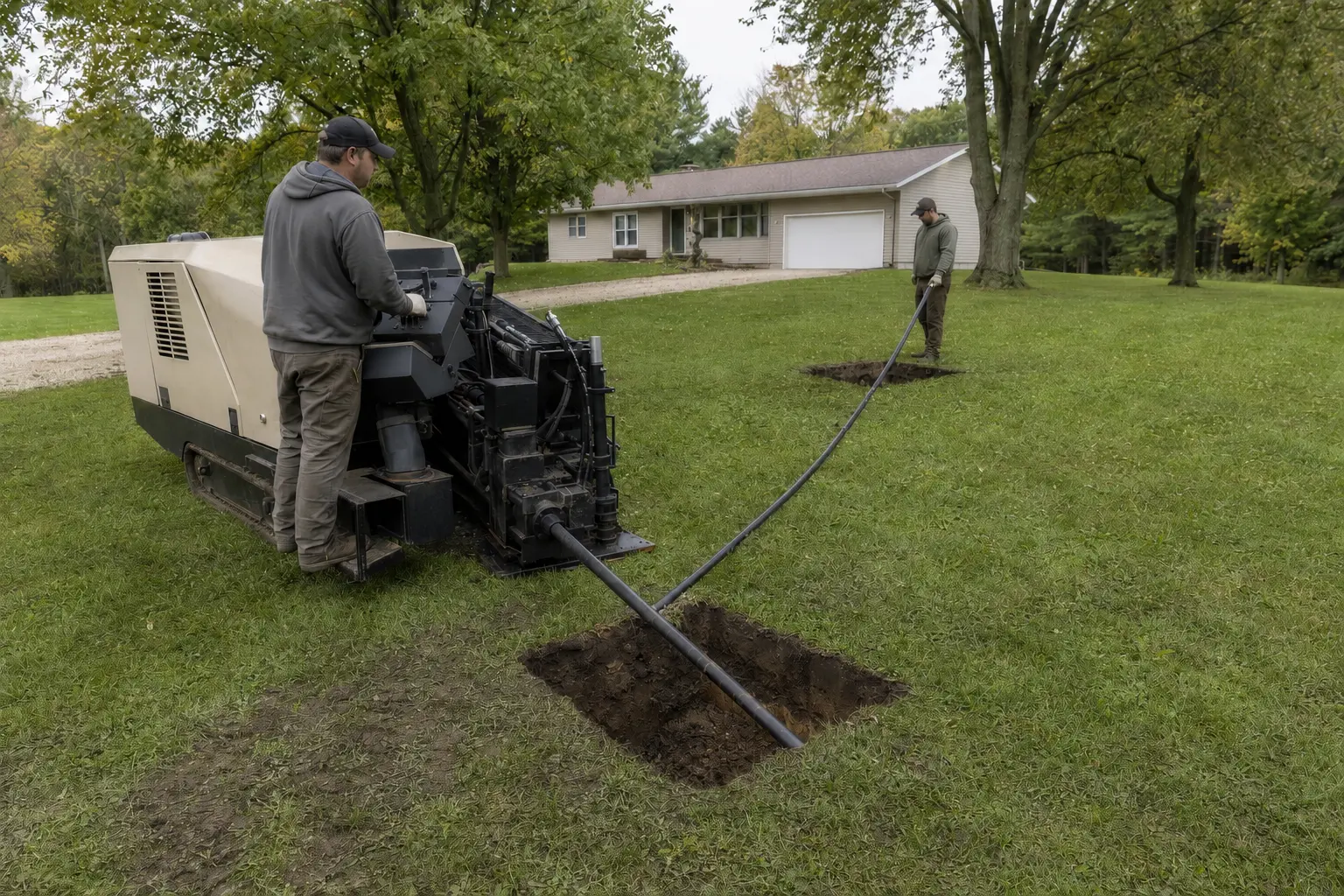
Trenchless sewer rig operating between small access pits at a rural Wisconsin home

Quick answer

Trenchless sewer repair, sometimes called no-dig or low-dig sewer repair, rehabilitates or replaces underground pipe through limited access points. Pipe lining and trenchless pipe bursting are common options, but the existing route and condition must qualify.

Understand the service

What is trenchless sewer repair?

Trenchless work aims to solve underground pipe problems while limiting continuous excavation. Pipe lining creates a new pipe surface inside the old line, while pipe bursting breaks the old pipe outward as a new line is pulled into place.

Although these methods reduce digging, they are not completely excavation-free. Cleanouts, launch pits, receiving pits, and connection points may still require access.

When it may fit

When might this service be appropriate?

This work makes sense only when it matches the condition of the line. It may be discussed in situations such as these:

  • A driveway, mature landscaping, patio, or other finished surface lies over the route.
  • The host pipe is continuous enough for lining, or suitable for a bursting head.
  • The route and utility clearances support the selected installation equipment.
  • Reducing the length of open excavation is a meaningful project priority.

What to expect

How the process typically works

  1. 1

    Camera and locate

    The full accessible run is inspected to identify defects, connections, and line geometry.

  2. 2

    Confirm candidacy

    Pipe material, deformation, utilities, bends, access, and soil conditions are reviewed.

  3. 3

    Prepare the line

    The pipe is cleaned and the required access points are established for the chosen method.

  4. 4

    Install and inspect

    The liner or replacement pipe is installed, connected, and checked after completion.

Compare proposals clearly

Questions to ask before authorizing this work

A clear proposal should say what was found, which section will be treated, and what the quoted price includes. Before signing, ask:

  • Which trenchless method is proposed, and what inspection findings make the line a good candidate?
  • What defects or route conditions could disqualify the line after work begins?
  • Where will cleanouts, launch pits, receiving pits, or connection excavations be required?
  • How will service connections, diameter changes, bends, and the downstream connection be handled?
  • What final camera inspection, testing, restoration, and warranty are included?

Property-specific planning

What should be evaluated first?

Pipe material and condition matter, but so do access, depth, utilities, and the reason the problem started.

Best-fit method

Whether lining, bursting, a spot repair, or traditional excavation matches the actual defect.

Access requirements

Cleanouts, pits, pipe ends, equipment placement, and room for pulling or curing.

Underground constraints

Other utilities, severe offsets, collapsed sections, diameter changes, and soil conditions.

Helpful details

Trenchless Sewer Repair FAQs

Practical details to check before deciding whether this service fits the line and the property.

Does trenchless sewer repair require any digging?

Usually some access is still needed. The key difference is that a continuous trench along the entire sewer route may be avoided.

Is pipe lining the same as pipe bursting?

No. Lining forms a new interior within the existing pipe, while bursting breaks the old pipe and pulls a new pipe through its path.

How do I know if my line qualifies?

A camera inspection, locating, utility review, and site assessment are needed. Qualification depends on the defect, pipe material, route, and access.

Is trenchless repair completely no-dig?

Not usually. 'No-dig' is a common search term, but most trenchless projects still need cleanout access, one or more pits, or excavation at connection points.

Need help with the next step?

Describe the problem and share the property location.

Request a Free Estimate