Understand the symptom
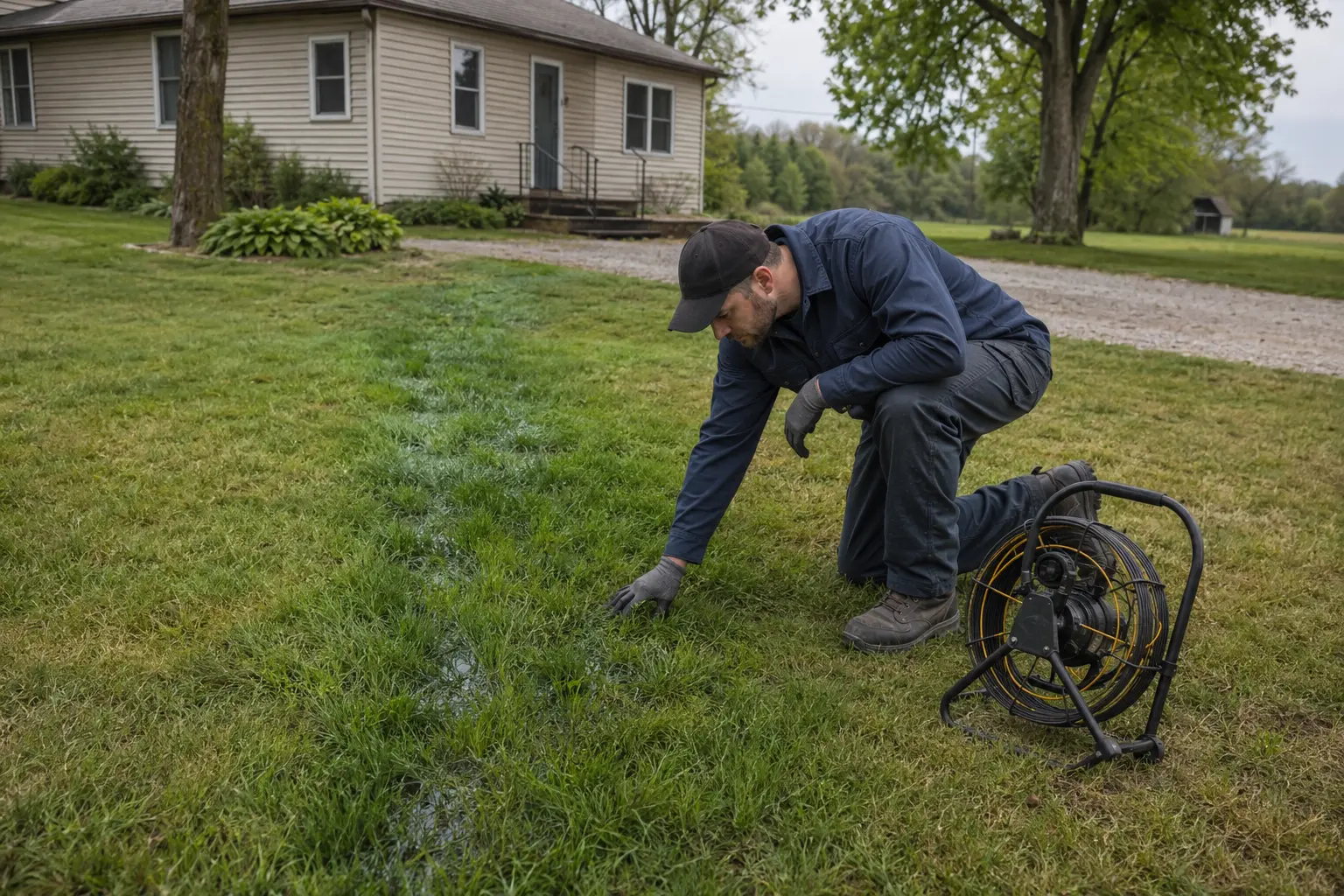
What can green or soggy yard mean?
Wastewater escaping from a cracked pipe or failed joint can add moisture and nutrients to the soil. The result may be a narrow green strip, a sunken area, spongy ground, or a wet patch that does not match the rest of the yard.
Central Wisconsin's spring thaw, clay or compacted soils, and seasonal rainfall can also leave low areas wet. A sewer concern becomes more likely when the patch follows the lateral's route, persists during drier weather, smells unusual, or appears along with slow drains and recurring clogs.
Possible sources
Common causes to consider
Cracked or separated sewer pipe
A failed joint, fracture, or deteriorated section can release wastewater into the trench soil.
Root-related opening
Roots can widen an existing defect and create a path for both infiltration and leakage.
Settled or collapsed line
Soil movement and pipe failure can hold water, leak, and create surface settlement.
Surface or groundwater
Downspouts, grading, sump discharge, thaw, and naturally wet soil may be responsible instead of the sewer.
Protect the property
What should you do now?
- Keep children, pets, and lawn equipment away from unusually soft or foul-smelling ground.
- Note whether the area follows the sewer route and changes after heavy household water use.
- Check obvious surface sources such as downspouts, sump discharge, irrigation, and recent rain or snowmelt.
- Arrange a sewer evaluation when the wet area persists, smells unusual, settles, or accompanies indoor drainage symptoms.
Find the cause
How the problem is typically diagnosed
- 1
Map the wet area
The surface pattern is compared with grading, drainage features, utilities, and the sewer path.
- 2
Review interior symptoms
Slow drains, backups, odor, and recent clearing history can connect the yard condition to the lateral.
- 3
Camera and locate
An accessible line can be inspected and notable defects located from the surface.
- 4
Confirm the repair area
Additional testing or focused exposure may be needed before choosing repair, lining, or replacement.