Understand the symptom
What can multiple drains backing up mean?
One backed-up sink or tub can be caused by a clog in that fixture's branch drain. When toilets, showers, sinks, or floor drains react together, the problem is more likely to be downstream where those drain lines join the home's main sewer lateral.
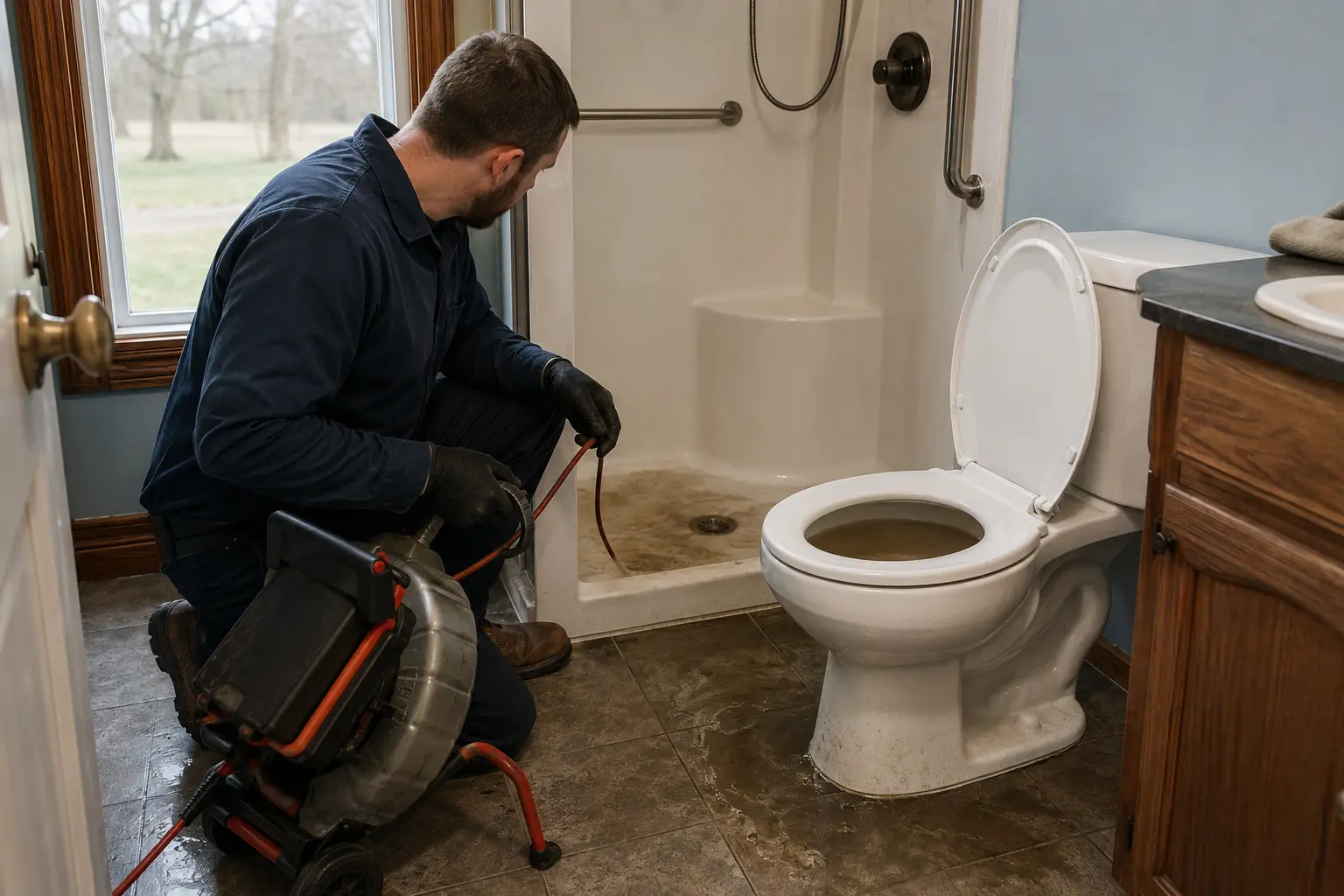
Backups may begin intermittently and become more frequent as a restriction worsens. Running a washing machine, draining a bathtub, or flushing an upstairs toilet can force wastewater out through a lower shower or basement floor drain because the flow has nowhere else to go.
Possible sources
Common causes to consider
Main-line blockage
Wipes, paper, grease, debris, or a combination of materials can restrict the shared sewer line.
Tree-root intrusion
Roots can enter cracked joints and form a dense catch point for waste moving through the pipe.
Damaged or collapsed pipe
A separated joint, severe offset, crushed section, or deteriorated pipe can reduce or stop flow.
Low or settled section
A belly in the line can hold water and solids, allowing recurring blockages to build in the same area.
Protect the property
What should you do now?
- Stop flushing toilets and pause showers, laundry, dishwashing, and other water use.
- Keep children and pets away from any wastewater and avoid contact with contaminated surfaces.
- Do not add chemical drain cleaner; it may not reach a main-line obstruction and can create another hazard.
- Request main sewer line clearing and an inspection if the backup is severe, recurring, or affects several fixtures.
Find the cause
How the problem is typically diagnosed
- 1
Compare affected fixtures
The location and order of backups help distinguish a branch-drain clog from a main-line problem.
- 2
Check the cleanout
A suitable cleanout may provide evidence of a full line and a safer access point for clearing equipment.
- 3
Restore flow
Mechanical clearing or hydro jetting may be used when appropriate to open the line.
- 4
Inspect the pipe
A camera can look for roots, offsets, buildup, bellies, or structural damage after the line can be viewed.