Understand the symptom
What can frozen sewer line mean?
A working gravity sewer normally carries warm household wastewater below the frost line, so a buried line does not freeze simply because the air is cold. Freezing becomes more likely where water remains in a belly, the pipe is shallow or exposed, insulation is inadequate, flow is infrequent, or cold air reaches the system through an opening.
The symptoms can resemble an ordinary clog: fixtures slow down, toilets gurgle, or water rises at a basement floor drain. Timing is an important clue. A sudden problem during an extended cold period, especially at a property with a known shallow or low-use section, increases suspicion but does not prove ice is the cause.
Possible sources
Common causes to consider
Standing water in a belly
A sagging or back-pitched section can retain water that freezes instead of draining completely.
Shallow or exposed pipe
A line above normal frost protection, beneath an unheated area, or near an exposed outlet can lose heat quickly.
Low or intermittent flow
Vacant, seasonal, lightly used, and certain rural properties may not send enough warm wastewater through the line.
Existing restriction
Roots, buildup, debris, or a damaged section can hold water and create a location where ice develops.
Protect the property
What should you do now?
- Stop running dishwashers, washing machines, showers, and other high-volume fixtures if water is not leaving normally.
- Keep people and pets away from any wastewater that reaches a floor drain, tub, shower, or outdoor surface.
- Do not apply an open flame, torch, uncontrolled electrical heat, or caustic drain chemicals to the pipe.
- Share when the problem began, recent temperatures, property-use history, and any known shallow, exposed, or previously frozen sections.
Find the cause
How the problem is typically diagnosed
- 1
Compare symptoms and weather
The fixture pattern, timing, temperature history, and earlier sewer problems help distinguish ice from an ordinary blockage.
- 2
Identify the affected route
Accessible cleanouts, pipe routing, exposed sections, and locating equipment help narrow the likely freeze point.
- 3
Thaw with controlled equipment
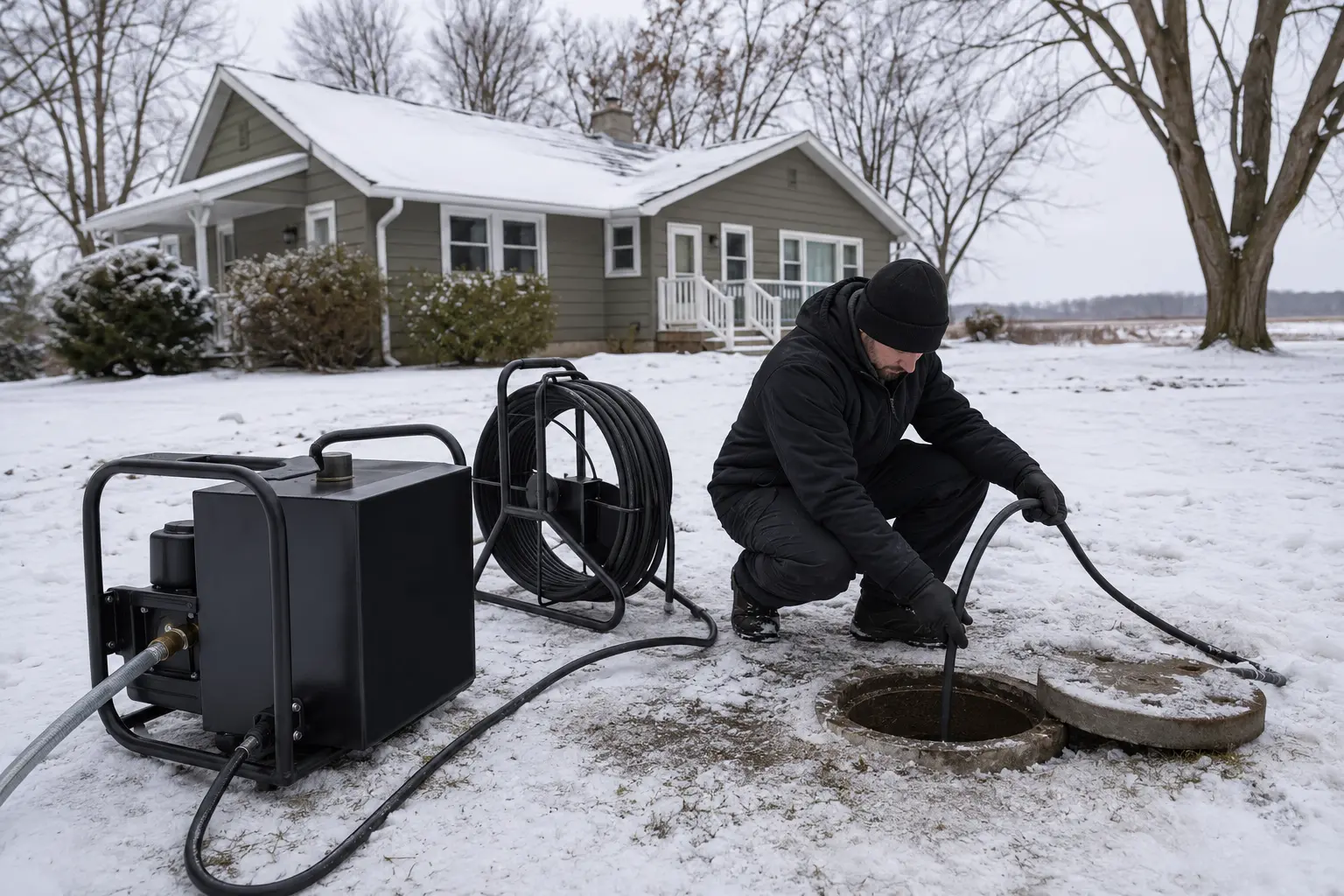
A qualified provider may use purpose-built hot-water jetting or other approved equipment matched to the pipe and access.
- 4
Inspect the reason it froze
After flow returns, the line may need a camera inspection to look for a belly, restriction, damage, or other condition that can hold water.