Understand the symptom
What can slow drains throughout your home mean?
Every fixture eventually connects to the main building drain and sewer lateral. A narrowing in that shared path can still allow some water through, but larger discharges take longer and may create pressure changes in toilets and floor drains.
Gradual slowing can be caused by roots, scale, grease, debris, or a settled pipe. A sudden change may follow a newly lodged obstruction or pipe movement. Recognizing the whole-home pattern early can provide time to inspect the line before it becomes completely blocked.
Possible sources
Common causes to consider
Partial sewer blockage
Waste, wipes, grease, or debris can leave a smaller opening that drains slowly under heavier flow.
Root intrusion
Fine roots can begin restricting flow and collecting material before causing a complete backup.
Scale or corrosion
Older cast iron and other materials can develop a rough, narrowed interior that slows drainage.
Belly, offset, or deformation
Standing water and reduced pipe area can make multiple fixtures sluggish and prone to clogging.
Protect the property
What should you do now?
- Compare fixtures in different rooms and on different floors to confirm the problem is widespread.
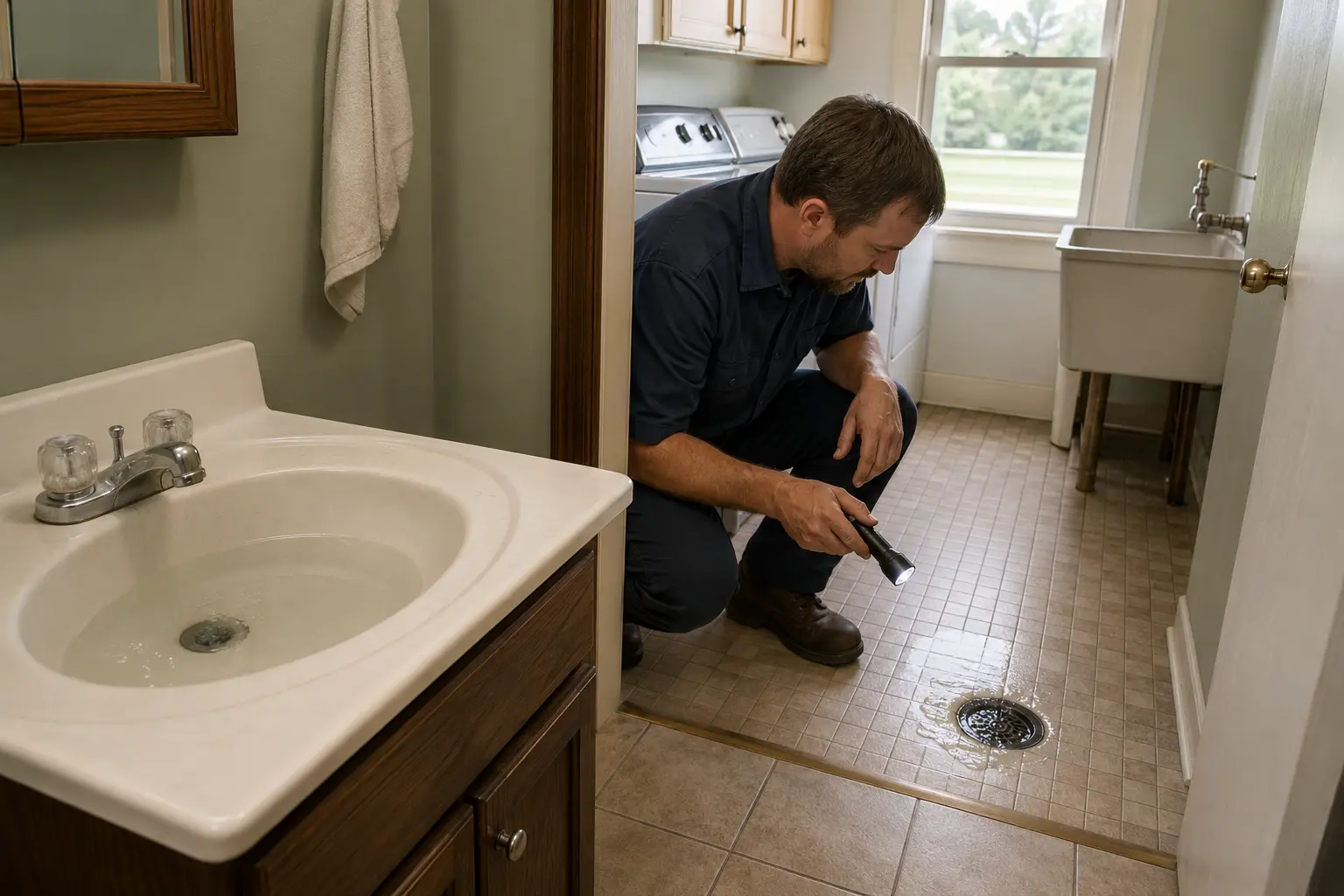
- Watch the lowest drain while another fixture is used, without continuing if water begins to rise.
- Avoid sending large volumes of water through the system until the cause is clearer.
- Arrange main-line evaluation when several drains remain slow or the condition is worsening.
Find the cause
How the problem is typically diagnosed
- 1
Map the affected drains
Fixture locations show whether the slowdown is isolated to one branch or shared throughout the home.
- 2
Check accessible sewer points
A cleanout and the lowest drain can provide evidence of a downstream restriction.
- 3
Clear the line if needed
Appropriate cleaning restores flow and creates a path for inspection.
- 4
Inspect for recurrence risks
A camera looks for roots, buildup, pipe damage, standing water, and other causes of slowing.