Understand the service
What is sewer line replacement?
Replacement addresses a long section or the full private sewer line instead of correcting one isolated defect. New pipe is connected from the building side to the appropriate downstream connection, with slope and alignment established for reliable gravity flow.
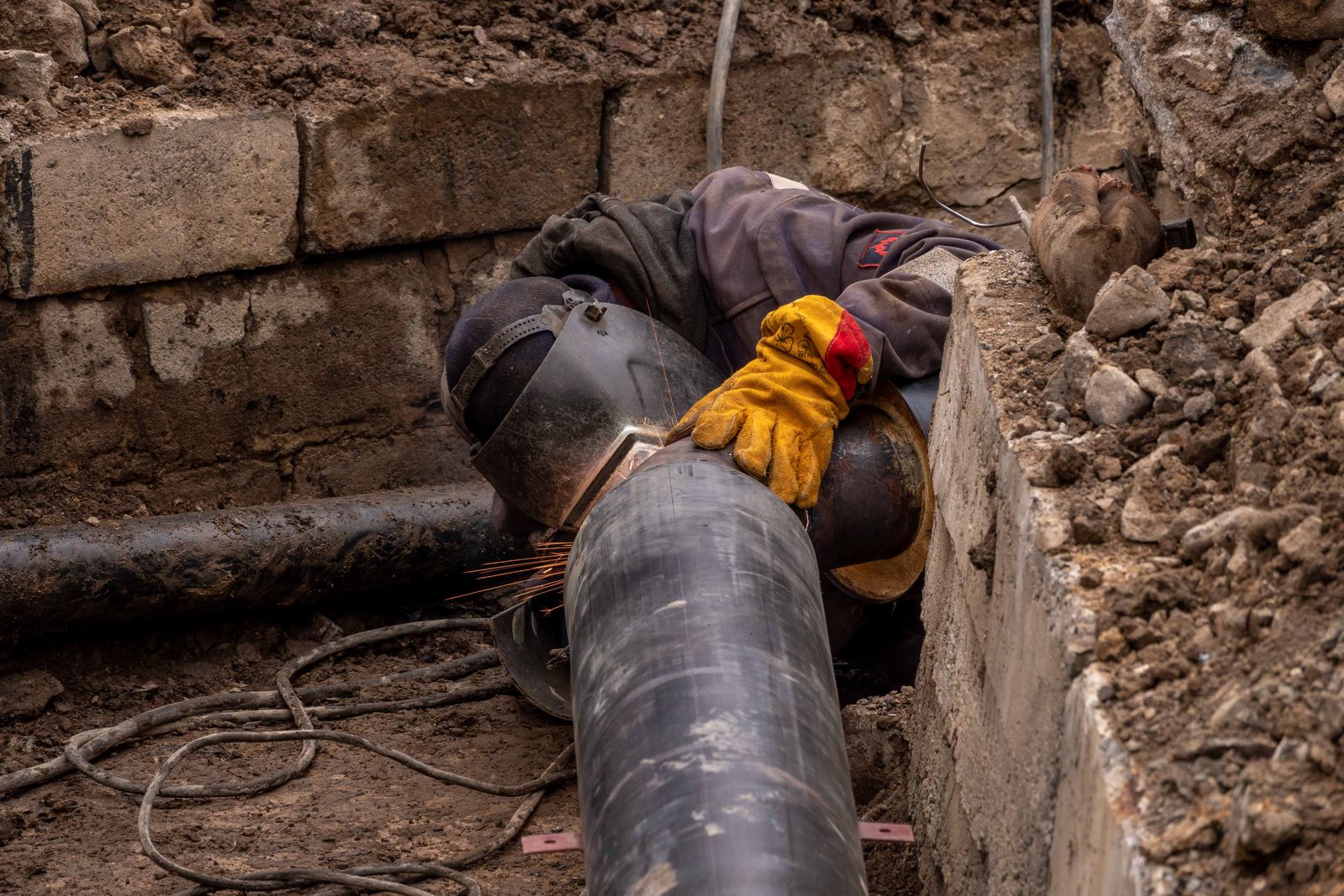
The work may use a traditional open trench, pipe bursting, or a combination of access pits and excavation. The best approach depends on the route, utilities, soil, pipe material, depth, and condition shown by inspection.
When it may fit
When might this service be appropriate?
This work makes sense only when it matches the condition of the line. It may be discussed in situations such as these:
- The pipe is collapsed, badly corroded, or deteriorated in several areas.
- Multiple spot repairs would leave other weak sections in place.
- A significant belly or alignment problem prevents dependable drainage.
- Recurring roots and blockages are tied to widespread joint or pipe failure.
What to expect
How the process typically works
- 1
Map the route
Inspection, locating, and utility information establish the existing line and connection points.
- 2
Compare methods
Open excavation, pipe bursting, or a combined approach is evaluated for the property.
- 3
Install new pipe
The failing run is removed, broken out, or replaced along the approved path and grade.
- 4
Connect and confirm
Connections, flow, and the new line are checked before access areas are closed.
Compare proposals clearly
Questions to ask before authorizing this work
A clear proposal should say what was found, which section will be treated, and what the quoted price includes. Before signing, ask:
- Which section needs replacement, how long is it, and what camera evidence supports that scope?
- Was open excavation compared with pipe bursting, lining, or a combined approach?
- How will grade, connections, branch lines, and transitions between pipe materials be handled?
- Which permits, utility coordination, inspections, backfill, compaction, and restoration are included?
- How will the completed line be tested and documented before the access areas are closed?