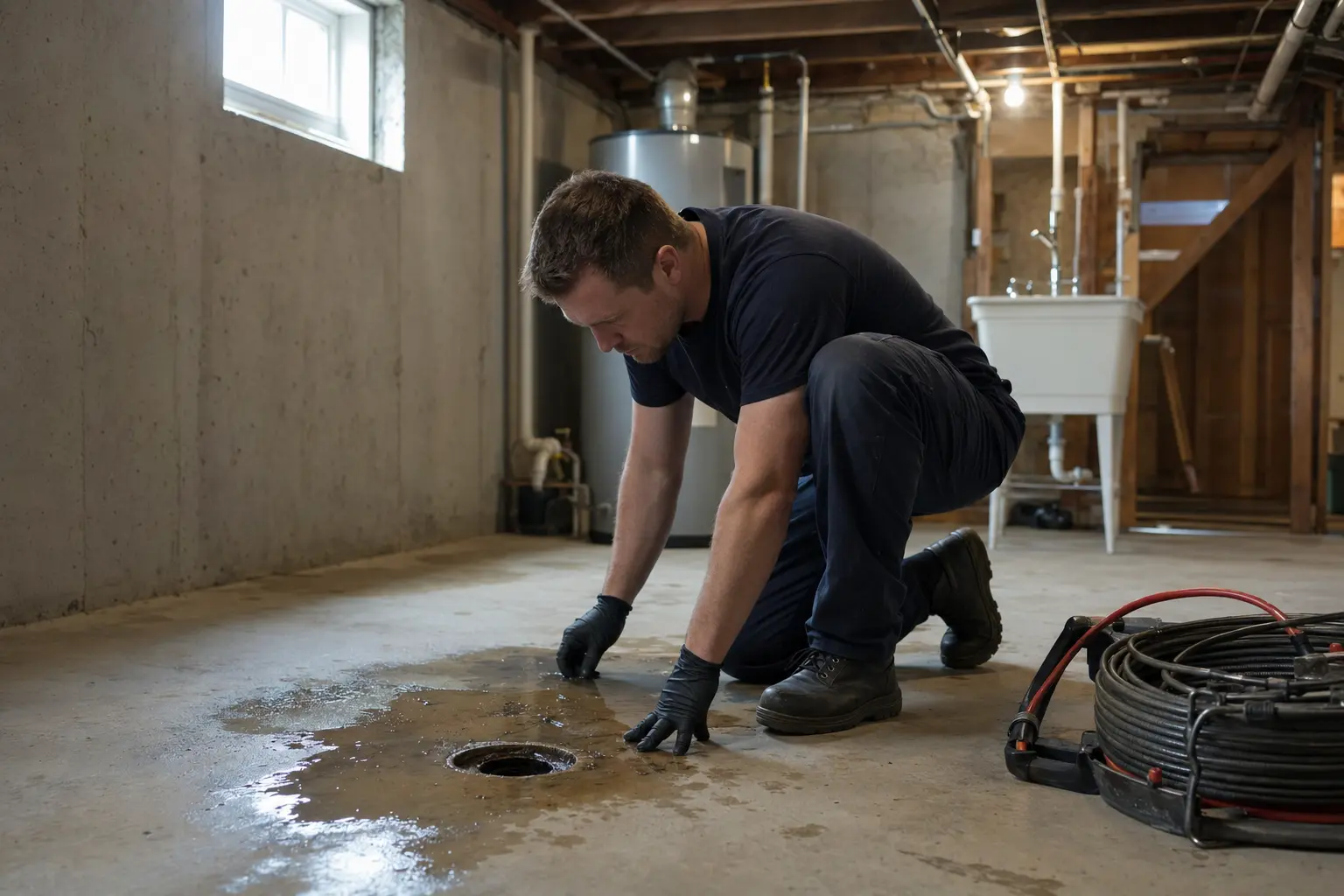
Understand the symptom
What can basement drain backups mean?
A small amount of clean water around a floor drain can have several causes, including a nearby appliance or foundation drainage issue. Water that is discolored, foul-smelling, contains waste, or rises when plumbing fixtures are used should be treated as a sewer backup.
The backup may be caused by a private lateral problem or, less commonly, conditions in a public main. The relationship between indoor water use, nearby properties, recent heavy rain, and the cleanout condition helps determine the next step.
Possible sources
Common causes to consider
Blocked private lateral
Roots, wipes, grease, scale, or debris can obstruct the sewer line serving the property.
Broken or settled pipe
A collapse, severe offset, or belly can stop normal gravity flow and hold waste.
Overloaded or obstructed public main
A downstream municipal issue can sometimes affect several properties, especially during unusual conditions.
Missing backup protection
Some properties may lack or have a problem with a backwater device intended to reduce reverse flow.
Protect the property
What should you do now?
- Stop all avoidable water use in the home, including laundry and dishwashing.
- Keep people and pets out of the affected area and avoid contact with wastewater.
- Do not use electrical equipment or enter standing water near outlets, appliances, or the service panel.
- Request prompt sewer assistance and document when the backup began and what water use triggers it.
Find the cause
How the problem is typically diagnosed
- 1
Confirm the water source
Color, odor, timing, and fixture use help distinguish sewage from groundwater or an appliance leak.
- 2
Check sewer access
The exterior cleanout may show whether the private lateral is holding wastewater.
- 3
Clear the restriction
Appropriate equipment is used to restore flow through the main line.
- 4
Look for the cause
A camera inspection may document roots, pipe damage, a settled area, or recurring buildup.